

Junior Tennis Progress: Quit or Push Through?

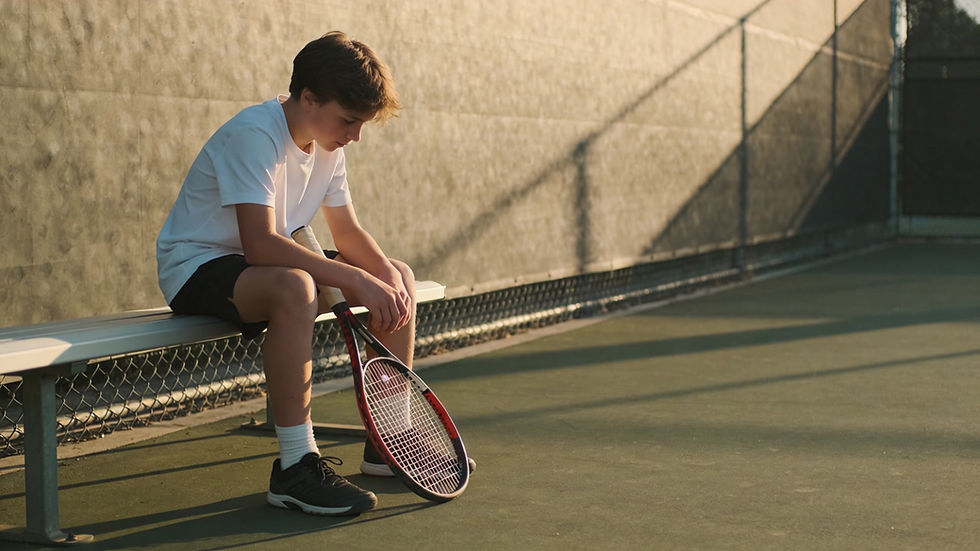
You're not being pessimistic. You're paying attention. And that's actually the right starting point.
Something feels off. The wins aren't coming. The rankings aren't moving. Training feels repetitive. You're putting in the hours and the results don't match the effort. That gap between what you're doing and what you're getting is real, and it deserves a real answer. Not a pep talk. Not a push to keep going without context. An honest look at what the numbers actually mean, and what they don't.
Is Your Frustration About Results or About Direction?
There's a difference between a player who is stuck and a player who is lost.
Stuck means the tools are there but something in the training, competition, or physical development needs adjustment. Lost means nobody has clearly defined what progress actually looks like for you at this stage, so every week feels like guessing.
Most players who consider quitting are lost, not stuck.
Rankings and match wins feel like the obvious scoreboard. But they're lagging indicators. They tell you what happened after months of development decisions—good or bad ones. By the time the ranking reflects a problem, the problem has been building for a while.
What does real progress actually look like in junior tennis?
Real development markers show up before results do. Look for these:
Are you solving problems mid-match that you couldn't solve six months ago?
Is your serve percentage improving under pressure, not just in practice?
Can you construct a point intentionally instead of just trading?
Are you physically faster, stronger, and more durable than last season?
Do you understand why you lose points, not just that you lost them?
If those answers are no across the board and have been no for more than a year, that's worth examining. If some are yes, you're developing. The scoreboard just hasn't caught up yet.
What Does a Normal Plateau Look Like vs. a Real Ceiling?
This is the question most players and families don't get a clear answer to. Coaches often say "keep working" without explaining what that work should look like or when to expect a shift. That vagueness is frustrating and fair to push back on.
How long does a plateau last in junior tennis development?
A normal plateau in junior tennis typically lasts three to nine months. During that window, the body and brain are consolidating skills that were recently learned. It doesn't feel like progress. It looks like stagnation. But something is happening underneath.
A real ceiling looks different. It shows up when:
Training has been high-volume but low-quality for an extended period
Competition exposure has been narrow—playing the same players, same surfaces, same formats
Physical development has been ignored or underprogrammed
There's been no honest feedback loop, just encouragement without analysis
The honest truth is that most "ceilings" in junior tennis aren't ceilings at all. They're the result of inefficient training systems that keep players busy without moving them forward. Smarter training doesn't mean more hours. It means the right inputs at the right time with clear feedback on what's working.
What should change if training isn't producing results?
The first thing to examine is the quality of the training environment, not the quantity of sessions. Are you getting tactical instruction or just drilling? Are your matches being reviewed with intention? Is someone tracking your physical development alongside your tennis development?
At Tennis Central, players go through structured development pathways that connect technical work, tactical understanding, physical progression, and competition experience. The goal isn't to fill a schedule. It's to create clarity about where a player is and what they need next.
How Do You Know If You Actually Have the Potential to Keep Going?
This is the question underneath the question. And it's worth answering directly.
Potential in junior tennis isn't just about talent at 12 or 13. It's about rate of development. A player who is improving steadily, even slowly, with clear markers moving in the right direction has a real path forward. A player who has been flat for two years in every measurable category, with no change in training approach, is in a different situation.
What age and stage markers matter most for junior tennis trajectory?
By 12-14, players should be developing consistent tactical patterns, not just hitting well. Physical literacy—coordination, speed, strength—should be growing. Match IQ, meaning the ability to read opponents and adjust, should be visible.
None of this requires a top-100 national ranking. It requires honest assessment against developmental standards, not against whoever happened to win the tournament last weekend.
If you're 13 and improving across those markers, even without the results yet, there is real runway ahead. The U14 Team USA pathway, which Tennis Central supports through tryouts across all 50 states, exists precisely because development at that age is about trajectory, not current ranking.
What if I genuinely love the game but hate where I am right now?
That distinction matters. Hating where you are is a data point about your current situation, not about your potential. Hating the game itself is a different signal.
If the love is still there, even buried under frustration, that's worth protecting. The competitive tennis journey is long. Players who reach college programs and beyond almost always describe periods in their junior years where they considered stopping. What changed wasn't talent. It was finding a training environment that gave them honest feedback and a clear path forward.
What Should You Actually Do Next?
Don't quit because you're frustrated. Don't keep going because someone told you to stay positive. Make a decision based on information.
Get an honest developmental assessment. Not a sales pitch. Not encouragement. An actual look at your technical, tactical, physical, and competitive markers—where they are, where they should be at your age, and what a realistic path forward looks like.
That's what smart development means. Not a promise of results. A clear picture of where you are and what it would take to move.
If the picture shows real stagnation with no clear cause and you've genuinely lost the drive, that's a valid place to make a decision. But most players who ask this question haven't gotten to that point yet. They've just been operating without enough clarity.
Tennis Central works with junior players and families across Washington DC, Bethesda, Potomac, Arlington, McLean, and Princeton NJ to build honest, efficient development pathways, not just training schedules. If you're at this crossroads, the first step is getting a clear read on where you actually stand.
Reach out directly to start that conversation: call 2024789655 or email booking@tenniscentral.net.
Checklist
Track development markers, not just results. Log serve percentage, point construction patterns, and match IQ monthly, not just wins and losses.
Ask your coach for a specific, written assessment of where you are against age-appropriate developmental standards.
Audit your training quality, not volume. If your junior tennis training program has been high-repetition but low-feedback, that's the first thing to change.
Separate "I hate where I am" from "I hate the game." One is a situational problem. The other is a deeper signal.
Request a competition audit. If you've been playing the same format, surface, and opponent pool for over a year, broaden the exposure before drawing conclusions.
Get an outside developmental assessment from a program that will give you honest feedback, not just encouragement.
FAQ
Is it normal to want to quit junior tennis even if you love the sport?Yes, and it's more common than most players admit. Frustration about stagnant results, unclear direction, or repetitive training often creates the urge to quit, even when the underlying love for the game is still there. That frustration is usually a signal about the training environment, not about the player's potential.
How do I know if I'm actually improving in tennis if my ranking isn't moving?Rankings are lagging indicators—they reflect past results, not current development. More useful markers include whether you're solving tactical problems you couldn't solve before, whether your serve holds under pressure, and whether your match IQ—reading opponents and adjusting—is visibly growing. If those are improving, development is happening even if the ranking hasn't moved yet.
What's the difference between a tennis plateau and hitting a real ceiling?A normal plateau lasts roughly three to nine months and happens while the brain and body consolidate recently learned skills. A real ceiling usually traces back to a specific cause: low-quality high-volume training, narrow competition exposure, ignored physical development, or no honest feedback loop. Most ceilings in junior tennis are the result of inefficient systems, not fixed limits.
At what age should a junior tennis player start worrying about their development trajectory?The U12-U14 window is when tactical patterns, physical literacy, and match IQ should be visibly developing, not necessarily producing top rankings, but showing clear directional improvement. If a player is 13-14 with no measurable movement across those markers after a full year of training, that's worth a serious honest assessment rather than continued encouragement without context.
What should I change if my junior tennis training isn't producing results?Start by examining the quality of training, not the quantity. Are you receiving tactical instruction or just drilling? Are your matches being reviewed with intention? Is physical development being tracked alongside tennis skills? High-volume, low-feedback training is one of the most common reasons junior players stagnate despite consistent effort.
Can a junior player still reach college tennis if they're struggling at 13?Trajectory matters more than current ranking at that age. A player improving steadily across developmental markers—tactical understanding, physical growth, competitive adaptability—has a real path toward college play. The college placement process is about long-term development, and players who find smarter training environments at 13 or 14 often make significant jumps by 16-17.
How do I find a junior tennis program that gives honest feedback instead of just encouragement?Look for programs that use specific developmental assessments, not just match results, to track progress. Ask directly: what are the age-appropriate benchmarks you measure against, and how often do you give written or structured feedback? Tennis Central, which serves players in Washington DC, Bethesda, Potomac, Arlington, McLean, and Princeton NJ, builds development pathways around honest assessment and clear progression markers.


Comments