

How Can My Child Improve Faster in Tennis?
Your child can improve faster in tennis when three conditions align: structured training with athletes who push the standard higher, honest guidance about the development pathway ahead, and a clear picture of what it realistically takes to reach their goals. Most junior programs deliver one of those three. An accelerated junior tennis development program is built around all of them together. Tennis Central's Incubator program brings families into that environment directly, so you can see and feel the difference before committing to a longer journey.
What Does an Accelerated Junior Tennis Development Program Actually Include?
An accelerated program combines high-repetition technical training, competitive peer pressure, and honest pathway planning - not just more hours on court.
Here is what that looks like in practice:
Train alongside higher-level athletes. Placing your child in sessions with high-performance players raises the standard in the room before the first ball is struck, shifting the pace of learning in ways private lessons alone cannot replicate.
Get grouped by development stage, not age. Players are matched by where they are in their development, so the training environment stays appropriately challenging as they progress rather than becoming comfortable and stagnant.
Work inside a shorter feedback loop. Sessions are designed to produce specific adaptations, and corrections reach the player faster than in a standard group format - which means less time reinforcing the wrong pattern.
Learn through the European Development System. This training framework sequences movement quality, tactical awareness, and competitive mindset alongside stroke mechanics, rather than leaving those elements to accumulate slowly over years of repetition.
Have a Horizon Call. This is a direct conversation about your child's aspirations, their current development stage, and what it realistically takes to reach their goals - honest pathway planning, not a motivational pitch about potential.
The program also gives families something most programs never offer: clarity. Not a projection about potential, but an honest look at the pathway, the timeline variables, and the decisions ahead.
The Incubator introduces families to Tennis Central's European Development System, a training framework designed to accelerate improvement through smarter structure, not simply more volume. A 2025 peer-reviewed study on junior tennis recommends no more than 12 hours per week of organized tennis for junior players - a ceiling that makes the quality and design of each session the deciding variable, not the total hours logged.
How Does the European Development System Differ from a Standard Academy?
The European Development System prioritizes movement quality, tactical awareness, and competitive mindset alongside stroke mechanics - and it sequences those elements deliberately rather than leaving them to accumulate over years of repetition.
The clearest evidence of what this system can produce comes from the development work Tennis Central has done at the performance level. Over four years, a junior player received consistent mentoring and guidance toward the fastest path to the pro level. That guidance proved instrumental in a season that saw the player go from unranked to ranked 97th on the ITF Junior World Tour. The following year, the same player won a first ITF challenger on the Pro Circuit. That kind of trajectory does not happen in a vacuum. It happens when the training environment, the guidance, and the competitive context are all pulling in the same direction - which is exactly what the European Development System is structured to produce.
Standard academy training often follows a one-size-fits-all calendar: group lessons, match play, and occasional private sessions. The European model used inside the Incubator works differently. It builds a training environment where the structure itself does the teaching. Players are grouped by development stage, not age alone. Sessions are designed to produce specific adaptations, and the feedback loop between coach and player is shorter.
For families thinking about a structured tennis development plan, the European approach answers a question most parents eventually ask: why does my child seem to plateau? The answer is usually that the training environment stopped challenging the player at the right level. The Incubator is designed to prevent that stall.
What Does the Horizon Call Actually Tell a Family?
The Horizon Call gives families a direct, honest assessment of their child's development pathway - including what it takes, how long it may take, and what decisions matter most right now.
This is the part of the Incubator that carries the most long-term value. Tennis Central provides honest guidance on what it realistically takes and how long it may take to reach a player's goals, which means the Horizon Call is not a motivational conversation - it is a planning conversation. Families leave it knowing where their child is on the development curve, which variables they control, and what the next meaningful checkpoint looks like.
The timeline for reaching any specific goal depends on factors that vary by player: current technical foundation, competitive experience, training consistency, and physical development stage. Tennis Central focuses on sustainable long-term development rather than projecting fixed timelines, because a projection that turns out to be wrong does more damage than a clear-eyed honest answer given early.
This kind of guidance matters especially for families navigating the path from junior play toward potential college placement. Tennis Central integrates training, competition planning, and long-term development guidance across that entire arc - and the Horizon Call is often where that conversation starts.
How Does Training Alongside High-Performance Athletes Change the Outcome?
Training environment shapes development pace more directly than most families expect, and the peer group inside a session is one of the strongest variables a program can control.
For younger players, when a junior trains inside a room where the standard is already high, the gap between where they are and where they need to be becomes visible and motivating rather than abstract. The Incubator sessions are structured to create exactly that dynamic.
Understanding how to support competitive junior tennis without burnout is part of what the Incubator environment is designed to model - high standards held inside a structure that is sustainable.
What Should Families in DC, MD, VA, and NJ Know Before Joining?
The Incubator is available to families in Washington DC, Bethesda, Potomac, Arlington, McLean, and Princeton NJ - and the program is designed as a genuine starting point, not a trial with a hard sell attached.
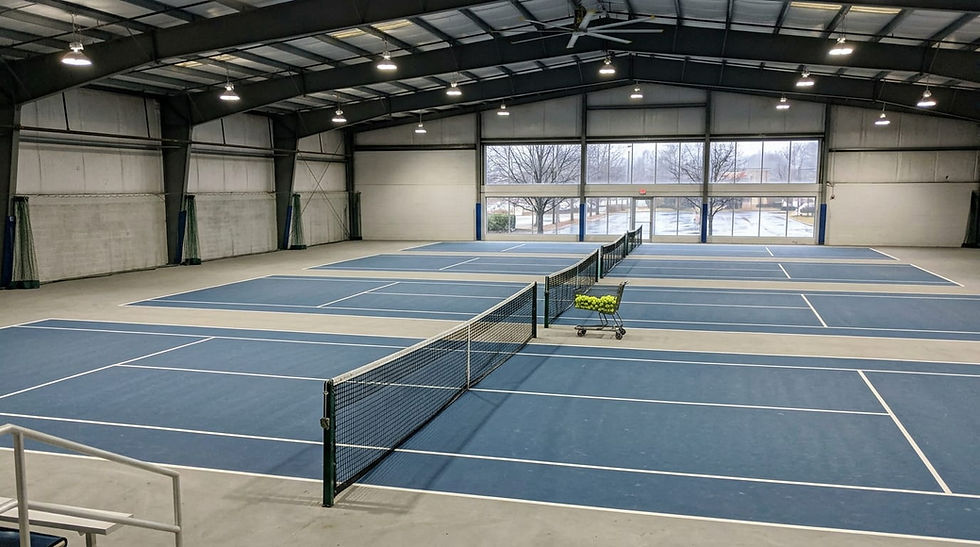
The three indoor sessions and the Horizon Call are the substance of the experience. Families come in, see the training environment, meet the athletes already inside it, and have a real conversation about their child's future in the sport. What happens after that is a decision made with more information than most families have ever had about their child's tennis development.
The combination of real training time and real planning conversation is what separates this from an open house or a free trial lesson. Families leave with both a felt sense of the environment and a clearer picture of what the road ahead actually looks like.
The Incubator Summer Camp is one natural next step for families who want to extend that experience into a longer developmental window after the initial program.
Tennis Central serves players and families across DC, MD, VA, and NJ, and supports development pathways from junior play through potential college placement. If your family is ready to have an honest conversation about your child's tennis future, reach out directly: call 2024789655 or email booking@tenniscentral.net.
FAQ
How much does the Tennis Central Incubator program cost? The program's price reflects the combination of six hours of indoor training sessions alongside high-performance athletes and a personal Horizon Call with a development mentor. What drives the value is not the hours alone but what those hours include: a real training environment and an honest planning conversation. Contact Tennis Central directly at booking@tenniscentral.net or 2024789655 for current pricing and availability.
Who is the Incubator program designed for? The Incubator is designed for junior players whose families want to understand what accelerated development actually looks like before committing to a longer program. It suits players at various stages - from those who have been training recreationally and are considering a more structured path, to competitive juniors who want an honest assessment of where they stand and what the road ahead requires. Tennis Central serves families in DC, MD, VA, and NJ.
Which training format produces faster improvement - group sessions or individual lessons? Neither format alone drives faster improvement. What matters is whether the training environment challenges the player at the right level, whether the feedback is specific and timely, and whether the player understands the pathway they are on. The Incubator combines group training alongside high-performance athletes - which raises the standard in the room - with a personal Horizon Call that gives the individual player and their family direct, honest guidance. That combination is what the European Development System is built around.
Where does the Incubator program fit in a junior player's long-term development arc? The Incubator is a starting point that gives families real information: a felt sense of the training environment and a clear picture of the development pathway ahead. Tennis Central integrates training, competition planning, and long-term guidance from junior play through potential college placement, so the Incubator sits at the beginning of that arc - the moment a family moves from wondering what is possible to understanding what it actually takes.


Comments