

Is It Too Late to Start Tennis as an Adult?
No, it is not too late to start tennis as an adult. Players at any age can develop real skills, build competitive habits, and find genuine enjoyment in the game - with the right structure behind them. What matters most is not when you started. It is how you train once you do.
Most adults who begin with intentional, structured guidance progress faster than those who learn casually over years. Modern training methods are designed around how adults actually learn - through pattern recognition, efficient repetition, and clear feedback - not through the same pathways used for eight-year-olds. The goal is not to catch up to players who started as children. The goal is to build a game that fits your life and keeps getting better.
Why Do Adults Think It's Too Late?
The assumption usually comes from watching junior players who have trained since childhood and assuming that gap is permanent. It is not.
Adults bring real advantages to the court: focus, coachability, physical coordination, and the ability to understand tactical reasoning immediately. A junior player learns a pattern through hundreds of repetitions over months. An adult can often grasp the same concept in a single session and apply it deliberately. That is a different kind of learning curve - not a slower one.
The comparison trap is the real obstacle. Adults who measure themselves against lifetime players in their first months lose motivation unnecessarily. A smarter frame: measure your game against where it was last month. That trajectory is what matters, and for adults with structured training, it moves steadily.
What Does Structured Adult Tennis Training Actually Look Like?
Structured adult training is built around efficient progression - not generic group drills, not unguided court time, and not the same curriculum used for junior development.
An intentional adult program addresses three things in parallel:
Technique fundamentals that build a reliable, repeatable game
Tactical understanding so every shot has a purpose, not just a direction
Match play integration so skills transfer from practice to real points quickly
The difference between casual tennis and structured development is measurable. Casual players often plateau within a year because they reinforce the same patterns without correction. Adults in structured programs continue improving because each session builds on the last with clear intent.
Tennis Central offers adult programs designed specifically for players starting at any level. The training is built around how adults learn - not a scaled-down junior curriculum.
Is Starting Tennis Late Worth the Investment?
This is the real question most adults are asking when they wonder if it is "too late." The honest answer depends on what you are investing for.
If the goal is professional competition, starting as an adult is a different conversation. But that is not why most adults take up the game. Most want a sport they can play for decades, a way to stay competitive, a social game that also challenges them physically and mentally. Tennis delivers all of that - and none of it requires a junior pedigree.
Consider what drives the cost of adult tennis development: the type of program (group vs. individual instruction), the frequency of sessions, and whether the program includes match play and structured feedback or only drilling. What separates a program worth the investment from one that is not is whether it is designed to move you forward with each session or simply fill court time.
Adults who start with a clear development plan and consistent instruction tend to reach a genuinely competitive recreational level within a reasonable training window. No specific timeline can be promised - individual progress varies - but the pattern holds across players who commit to structured training.
Adults who commit to the top column typically see real, satisfying improvement. Those in the bottom column often plateau and assume the sport was not for them.
What Does Adult Tennis Look Like Right Now in 2026?
Adult tennis participation has grown significantly in recent years, and the programs available now reflect that. Modern adult instruction has moved away from the traditional "just rally and see what happens" approach toward structured, development-focused pathways that treat adult learners seriously.
In the Washington DC metro area and across Tennis Central's locations, adult programs currently include options for complete beginners through competitive players working on strategy and doubles mastery. The range means a player starting from zero has a genuine pathway - not a single beginner class that leads nowhere.
One pattern observed consistently at Tennis Central: adults who arrive expecting to feel behind often discover they progress faster than they anticipated, specifically because structured modern training meets them where they are rather than where a junior curriculum would expect them to be.
What If You Have Never Played Before?
Starting from zero as an adult is one of the most common situations in adult tennis programs - and one of the most manageable. The fundamentals of tennis are learnable at any age. Grip, footwork, court positioning, and basic shot patterns can all be built from scratch with clear instruction.
The first phase of adult development focuses on building a reliable, consistent game rather than an impressive one. Consistency comes before power. Placement comes before pace. This sequence is intentional: it builds a foundation that holds up under match pressure instead of one that looks good in warm-ups and falls apart in points.
Adults who try to skip this phase - usually because they are impatient or because a casual friend told them to "just hit harder" - tend to develop habits that take longer to correct than they would have taken to build correctly from the start.
Does Age or Structure Matter More for Adult Tennis Progress?
Age is a factor in athletic development, but it is rarely the deciding one for adult recreational and competitive tennis. The deciding factor is whether training is structured and intentional or casual and random.
Adults who train with a clear plan, consistent instruction, and real feedback develop games that keep improving year over year. Adults who pick up the sport casually, without guidance, often stall - and then conclude the sport was not for them, when the real issue was the approach, not the player.
Tennis Central's adult programs across its locations are built around this principle: development-first, efficient, and designed for players who want to actually improve, not just stay active. If you are considering starting, the right time is when you have access to structured guidance - and that is available now.
To learn more or get started, contact Tennis Central at 2024789655 or booking@tenniscentral.net.
Checklist
Assess your actual goal before starting - recreational fitness, social competition, or serious competitive play each require a different program structure.
Look for adult-specific programming, not a junior curriculum adapted for older players. Adult tennis programs built around intentional, efficient progression are structured differently.
Commit to a consistent frequency - sporadic sessions reinforce inconsistency. Two to three structured sessions per week moves development forward measurably faster than one occasional session.
Include match play early - drilling alone does not transfer to real points. A structured adult program integrates live ball and match scenarios from the beginning.
Track your progress against your own baseline, not against lifetime players. Monthly improvement in your own game is the right benchmark.
Ask any program how it handles progression - a program with no answer to that question is likely filling court time, not building a game.
FAQ
Is it really possible to become a competitive tennis player starting as an adult? Yes - competitive at the recreational level is genuinely achievable for adults who start with structured training. The goal is not to compete with players who have trained since childhood, but to reach a level where match play is challenging, satisfying, and improving over time. Many adults reach that standard within a consistent training window.
Who is adult tennis actually for - is it only for athletic people? Adult tennis programs are designed for players across a wide range of athletic backgrounds. Tennis Central's adult programs serve complete beginners through players working on strategy and doubles mastery. Prior athletic experience helps, but it is not a prerequisite. Coordination, consistency, and tactical understanding all develop through structured training regardless of starting fitness level.
Which is better for adult beginners - group lessons or private instruction? Both have a place in adult development. Group lessons build match-play instincts and social context; private instruction allows faster technical correction and personalized pacing. A structured adult program typically uses both. Starting with private instruction accelerates the technical foundation, while group and match-play formats build the competitive application of those skills.
How long does it realistically take to play a real tennis match as an adult beginner? Most adult beginners can engage in basic rally play and simple match formats within a few weeks of structured instruction. A genuinely competitive recreational game - one where tactics, consistency, and shot selection all function together - typically develops over several months of consistent, intentional training. No specific timeline can be promised, as individual progress varies, but structured training moves this timeline forward significantly compared to casual practice.
Where can adults start structured tennis training in the DC metro area? Tennis Central offers adult programs across Washington DC, Bethesda, Potomac, Arlington, and McLean, with options for players starting at any level. Programs are designed around intentional progression rather than generic group drilling, and include pathways from beginner fundamentals through competitive recreational play.
What makes modern adult tennis training different from how the sport was traditionally taught? Traditional tennis instruction was built around junior development models - high repetition over long timelines, with technique prioritized over tactical understanding. Modern adult programs recognize that adults learn differently: they apply tactical reasoning quickly, benefit from clear explanations, and progress faster when sessions have defined objectives. Tennis Central's adult training reflects this shift, using efficient, development-focused methods rather than adapting a junior curriculum.
How much does adult tennis instruction cost, and what should I compare between programs? Cost varies based on whether instruction is private or group, how frequently sessions occur, and whether the program includes structured match play and progression tracking or only drilling. The more useful comparison between programs is not the per-session rate but what each session actually builds toward. A program with intentional progression and real feedback is a different investment than one that fills court time without a development plan.

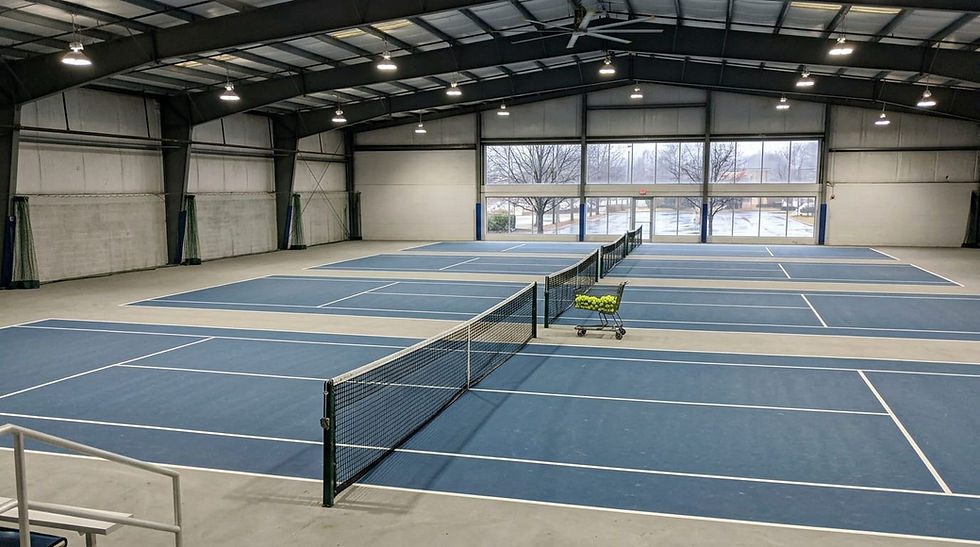

Starting tennis as an adult can be a great way to stay active, meet new people, and learn something completely different. You do not need to have played as a kid to enjoy the sport, and steady practice can make a big difference over time. I also like the idea of keeping other hobbies around for downtime, such as picking up an R36 Ultra for some casual retro gaming after a workout. The important thing is to start at your own pace, focus on basic technique, and enjoy the process instead of worrying about how quickly you improve.